
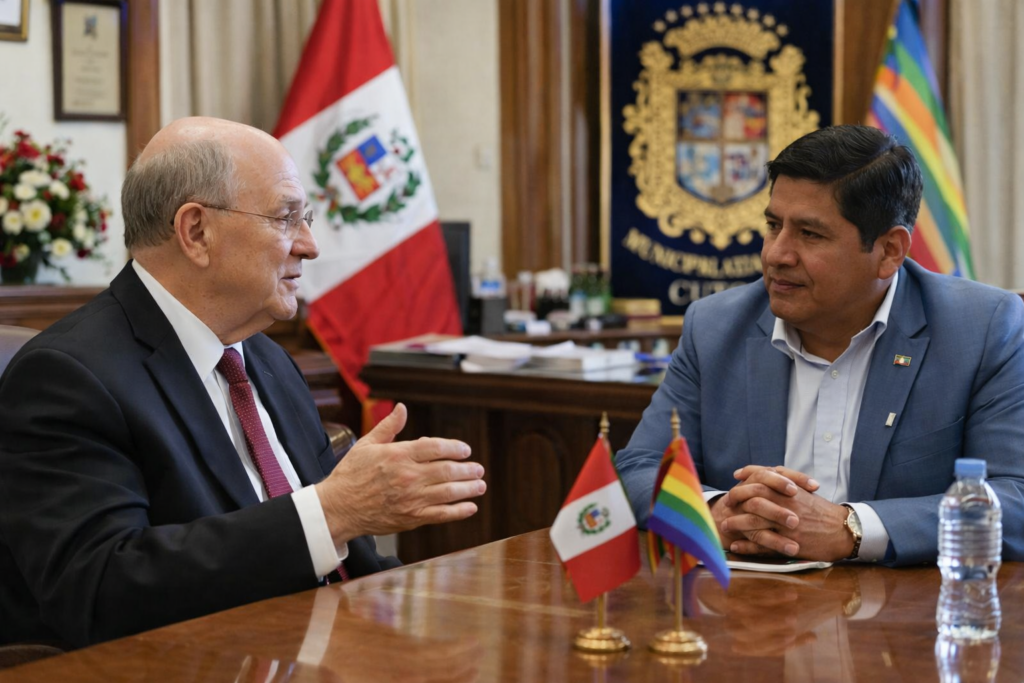
In recent months, Cusco has once again become a focal point of international religious attention. Elder Quentin L. Cook, a member of the Quorum of the Twelve Apostles of The Church of Jesus Christ of Latter day Saints, visited the city and met with local civic authorities, including the mayor of Cusco, as part of ongoing conversations related to the construction of the announced Cusco Peru Temple.
This visit represents more than a ceremonial appearance. Within the structure of the Church, members of the Quorum of the Twelve Apostles hold global responsibility for doctrinal guidance, administrative oversight, and the expansion of the Church’s mission worldwide. Their involvement in discussions with local governments often reflects the importance and long term vision of major projects, particularly temples, which are considered sacred spaces central to LDS religious life.
The Cusco Peru Temple was officially announced by President Russell M. Nelson during the April 2022 General Conference. Since then, the project has drawn interest not only from members of the Church, but also from the broader community, given Cusco’s historical, cultural, and spiritual significance. Temples are not regular meetinghouses. They are carefully planned structures intended to serve members across large geographic regions, often symbolizing permanence, commitment, and respect for local contexts.
During his visit, Elder Cook met with municipal leaders to discuss themes commonly emphasized in such meetings, including community service, respect for cultural heritage, and cooperation with local authorities. While the Church does not typically release detailed transcripts of these conversations, official communications and local reports confirm that the meeting addressed the temple project and its relationship with the city.
From an institutional perspective, these meetings reflect a consistent pattern. The Church seeks to work within local legal frameworks, maintain open dialogue with civic leaders, and ensure that temple construction aligns with urban planning and community expectations. In cities with deep historical roots such as Cusco, this approach is especially significant.
For members of the Church in southern Peru, the Cusco Temple represents improved access to sacred ordinances that previously required long travel to other cities. For observers outside the faith, the project illustrates how a global religious movement engages respectfully with ancient cities that already carry profound spiritual meaning.
At Christ in Peru, we view this visit as part of a broader historical moment. Cusco has long been a crossroads of belief systems, from pre Columbian civilizations to colonial Christianity and now modern global faith traditions. The presence of an LDS Apostle in dialogue with local leadership highlights how religious history in Peru continues to evolve, shaped by both tradition and contemporary engagement.
As the Cusco Temple project moves forward, it will remain a subject of interest not only for Church members, but also for scholars, historians, and those who follow the intersection of faith, culture, and place in the Andean world.