
By George Potter
The Amazon Basin is truly colossal and within its vast territory, there may be many Book of Mormon sites waiting to be discovered. The Amazon Basin covers approximately 2.7 million square miles – ten times the size of the state of Texas or the equivalent of thirty-two Utahs! It includes parts of Bolivia, Brazil, Colombia, Ecuador, Guyana, Peru, Suriname, Venezuela, and French Guiana. It contains 60% of the world’s rainforest. Hidden in its jungles are countless undiscovered ruins and artifacts just waiting to be discovered. For these reasons, I included in my latest book Christ’s Mission in Ancient South America a disclaimer stating that my model for the Book of Mormon lands in South America is “tentative.”
The first Westerner to explore the entire length of the Amazon River was Francisco de Orellana from 1541 to 1542. He was second in command to Gonzalo Pizzaro during an expedition east of Quito, Ecuador. The Spanish were searching for the “Land of Cinnamon.” After splitting from Pizarro’s struggling party, he found it difficult to return upstream, so he continued downriver with a small group. Eventually, he reached the mouth of the Amazon in August of 1542. Since he encountered indigenous women-led warriors, he named the river the Amazon.
While navigating down the river, his party reported large, populous, and well-organized native communities. Orellana claimed that for days at a time, his expedition passed villages and towns that seemed to stretch along the riverbanks without interruption. He noted that the towns had centralized leadership, agriculture, and defensive structures, suggesting complex societal organizations. For centuries, Orellana’s claims were written off as myths. Despite knowing that at least 80% of South American Indigenous People at the time of the Spanish conquest had died from smallpox and other introduced diseases, Westerners still believed that primitive people had sparsely inhabited the Amazon Basin.
Recent archaeological and ecological studies—such as discoveries of terra preta (fertile dark earth) and geoglyphs—support the idea that the Amazon once supported large and sophisticated civilizations. These findings lend credibility to Orellana’s controversial claims, which were long dismissed as exaggerations. Further proof came from recent LiDAR surveys, which confirmed that a civilization larger than the Mayan once existed in the Ecuadorian Amazon. Research in Brazil, Bolivia, and Peru has discovered large settlements, extensive road systems, canals, raised agricultural fields, and geoglyphs in the Amazon Basin.[1]
In 2024, the Smithsonian Institute reported the following finding of just one LiDar survey in eastern Ecuador:
Laser imaging has revealed an extensive network of settlements and roads that challenge historical understandings of the area
The area was surveyed using lidar technology, which revealed a large-scale network of roads and platforms. Antoine Dorison, Stéphen Rostain
Using laser scanning technology, researchers have found traces of 2,500-year-old cities in the Amazon rainforest. Complete with a complex network of farmland and roads, the discovery is the oldest and largest of its kind in the region.
Located in Ecuador’s Upano Valley, the dense system of pre-Columbian structures lies in the eastern foothills of the Andes mountains, according to a study published Thursday in the journal Science. Over 20 years of research preempted the find, but it wasn’t until the Ecuadorean government employed lidar—a remote sensing technology that surveys a landscape using lasers—that the ancient urban centers came to light.
“I have explored the site many times, but lidar gave me another view of the land,” archaeologist Stéphen Rostain, lead author of the study and director of research at the French National Center for Scientific Research (CNRS), tells Live Science’s Jennifer Nalewicki. “On foot, you have trees in the way, and it’s difficult to see what’s actually hidden there.”
Rostain knew from his many ground expeditions that laser imaging would reveal new structures, but he hadn’t predicted the scale of the results, reports Science News’ Amanda Heidt. Covering roughly 300 square kilometers (more than 100 square miles), images from the lidar survey revealed a landscape full of organized human activities: These included more than 6,000 rectangular earthen platforms, as well as agricultural terraces and drainage systems.
Researchers found rectangular platforms along the bed of the Upano River in Ecuador.
The researchers say these structures formed at least 15 distinct settlements, which were connected by a system of wide, straight roads. Co-author Antoine Dorison, an archaeologist at the CNRS, says this society’s complexity is especially evident in this web of streets, which were carefully constructed to cross at right angles rather than follow the landscape.
“The road network is very sophisticated,” he tells BBC News’ Georgina Rannard. “It extends over a vast distance; everything is connected.”
Per a statement from the researchers, the sprawling complex was likely occupied by people from the Kilamope and Upano cultures from about 500 B.C.E. until 300 to 600 C.E. The residents were probably focused on agriculture, growing corn and sweet potatoes.
“It’s a gold-rush scenario, especially for the Americas and the Amazon,” Christopher Fisher, an archaeologist at Colorado State University who has scanned sites in the Americas but was not involved in this research, tells Science News. “Scientists are demonstrating conclusively that there were a lot more people in these areas, and that they significantly modified the landscape. … This is a paradigm shift in our thinking about how extensively people occupied these areas.”
Previously, scientists assumed that ancient South Americans “lived nomadically or in tiny settlements in the Amazon,” writes BBC News, but researchers estimate the newly discovered cities housed a population “in the 10,000s if not 100,000s.”[2] (emphasis added)
It is too early to theorize on the role the Indigenous People of the Amazon Basin played during Book of Mormon times; however, recent findings seem to add credibility to earlier claims that appear to support the idea that these people had some affiliation with the Book of Mormon. Here is a sampling:
Native Hebrews in the Amazon:
In 1644, Antonio de Montezinos arrived in Amsterdam after a decade in South America. He hurried to meet with Rabbi Menasseh ben Israel and other Jewish leaders to recount his extraordinary tale. While prospecting in the Ecuadorian region of New Grenada, he traveled with several Indian guides on their way to Papián in Peru. It was here that he came across a reference to the ‘holy people’. He convinced his guides to take him to meet these people. The Indians were fair-skinned, spoke Hebrew, recited the Sh’ma prayer, and were the descendants of the Lost Tribe of Reuben. The Indians wanted to be thoroughly instructed in the principles of their faith. Montezinos returned to Europe as their emissary. He swore on his deathbed in Brazil in 1647 that this story was true.
White-skinned tribes in the Amazon
A 2008 London Daily Article reported that a lost city had been discovered in Peru and that it was linked to the legendary white-skinned people. Ancient city discovered deep in Amazonian rainforest linked to the legendary white-skinned Cloud People of Peru
A lost city discovered deep in the Amazon rainforest could unlock the secrets of a legendary tribe. Little is known about the Cloud People of Peru, an ancient, white-skinned civilization wiped out by disease and war in the 16th century. But now archaeologists have uncovered a fortified citadel in a remote mountainous area of Peru known for its isolated natural beauty.
It is thought this settlement may finally help historians unlock the secrets of the ‘white warriors of the clouds’.” The tribe had white skin and blonde hair – features which intrigue historians, as there is no known European ancestry in the region, where most inhabitants are darker skinned. The citadel is tucked away in one of the most far-flung areas of the Amazon. It sits at the edge of a chasm which the tribe may have used as a lookout to spy on enemies.
The area where the lost city was discovered by a team of archaeologists. The Chachapoyas, also called the Warriors of the Clouds, were an Andean people living in the cloud forests of the Amazonian region of present-day Peru….
Even the name they called themselves is unknown. The term Chachapoyas, or ‘Cloud People,’ was given to them by the Incas. Their culture is best known for the Kuellap fortress on the top of a mountain in Utcubamba, which can only be compared in scale to the Incas’ Machu Picchu retreat, built hundreds of years later. Two years ago, archaeologists found an underground burial vault inside a cave with five mummies, two intact with skin and hair.
Chronicler Pedro Cieza de Leon wrote of the Chachapoyas, tribe: “They are the whitest and most handsome of all the people that I have seen, and their wives were so beautiful that because of their gentleness, many of them deserved to be the Incas’ wives and to also be taken to the Sun Temple. ‘The women and their husbands always dressed in woolen clothes and in their heads they wear their llautos (a woolen turban), which are a sign they wear to be known everywhere.”[3]
In 1542, Francisco de Orellana, while sailing the San Pedro up the Río Napo, a tributary of the Amazon, heard tales of the Ozacoulets, a tribe of white skinned warriors with blue eyes and long light-colored beards. Indians from the villages of the Machipara River attacked the expedition; the white houses glimmered as if golden. Orellana and his men then came upon the ‘excellent land and dominion of the Amazonas’, and were beset upon by ‘very tall and white’ fighting women, whose religion was sun worship. These women of fair complexion had their long hair twisted over their heads, wore skins of wild animals wound round their loins, and carried bows and arrows: an image derived from Classical literature. Orellana thought he was on the verge of discovering El Dorado, the golden city built on a plain by a mighty river, with ‘fine highways’ that led into the interior. A realm ruled by fierce white women who were masters over the Indian tribes. In commemoration of the attack, he named the river Amazon.[4]
Graham Holton in his book Lost Cities White Tribes describes the prevailing theory of how the Chachapoyas settled on the far eastern slopes of the Andes mountains. Their migrations could reflect the need of the remnant of the Nephites to flee the wars between their people and the Lamanites:
The Antisuyo, one of the four quarters of the Inca Empire, is the vast region jungle region along the eastern slopes of the Andes. Carbon-14 dating has shown that the cities of the Antisuyo reached their zenith around A.D. 900-1000. Sometime between 100 B.C. and A.D. 600 there was a total replacement of population from the valley-bottoms to building cities on the high ridges at elevations of up to 4000 metres [13,120 feet asl].[5]
Explorer Gene Savoy discovered forty-two lost cities in Antisuyo. He has lectured at Brigham Young University. Holton discusses Savoy’s claim of having contacted a tribe of white-skinned natives:
Savoy maintains that the Chachapoyans were descended from a light-skinned people who explored Peru for minerals and built cities of stone near their mines. The Incas named these foreigners sacha puya, (Chachapoya), the ‘cloud people’, because they lived amongst the cloud-cloaked mountains. Savoy argues instead that the name describes their white skins and blue eyes. During the 1965 expedition Savoy tells how while walking along a trail in the forest beyond the village of Mendoza: “We were approached by five tall men walking abreast. Dressed in blue and white ponchos thrown carelessly over their shoulders, they stood much taller than the average native of the region. Their bare feet slapped as they passed, I noticed that they were blond and blue-eyed, with long, thin faces and aquiline noses. They were decidedly white skinned, and I would have identified them as Viking-like… As we visited the villages of the region, I began to notice a large number of light-skinned, blue-eyed people. It was the first time I had ever seen this in all my travels in Peru. Had it not been in this particular region, with its long history of fair-skinned people, I might have attributed it to European influences that could be traced back to the Colonial period.”
Why did Savoy not simply ask them? Rather than relying on such far-fetched imagination, Occam’s razor demands that the presence of blue-eyed people here can be explained by the 1930s Polish colony on the Ucayali River.[6]
While Holton may question Savoy’s claims, there are still the writings of the early Spanish stating that the Chachapoyas and Inca nobles were tall and had a skin tone lighter than the Spanish.
The People of Antipas
ANTIPAS was the name of a mount or hill on the summit of which Lamanite armies on one occasion had gathered themselves for battle (Alma 47:7). Antipas is a genuine ancient Peruvian (Quechua) word. On the mountain slope of the Cordillera, in the upper Amazon basin, there is, according to Dr. Brinton, a tribe of Indians, of the Jivaro linguistic stock, known as the Antipas. They are described as “rather tall, of light color, with thin lips, aquline noses, straight eyes, prognatic jaws, hair black or with reddish tinge.”[7]
Paraguay Oral Traditions
Carly M. Springer wrote of a tribe living in a small village in the vast Amazon basin:
If establishing the Church in the cities seems almost easy, the challenge is in preaching the gospel to those who live far away in the sparsely populated outer regions of Paraguay. Out in the grasslands and jungles, people live in scattered communities, and some tribes have their own separate languages.
However, at least one of these remote tribes has retained native oral traditions tracing back to Book of Mormon events, preparing its people for the gospel.
In 1980, an entire Nivaclé native tribe of 200 people converted to the gospel when missionaries told them the story of the Savior visiting the Americans. The leader of the tribe recognized the story as one passed down from their ancestors and knew he was hearing restored truths.
Today this tribe lives in a community of around 40 LDS families and has renamed their settlement Abundancia, Spanish for “Bountiful.”[8]
Countless Latter-day Saint missionaries serving from the Yukon to Chile, including myself, have encountered oral traditions of Native Americans of a fair-skinned god visiting their people, healing their sick, and forgiving them of their sins. This phenomenon is especially true in South America. For example, the Indigenous People of the Amazon worshiped Sumê, the God of Agriculture and Discipline. Sumé had a white beard and provided laws and rules for the people.[9]
Phoenician Artifact Found at the Mouth of the Amazon River
In 1872, Alves da Costa claimed that while moving stones on his property, his slaves found a broken stone with inscriptions on it. Known as the Paraíba inscriptions, it was found in Pouso Alto, Brazil. A copy of the inscriptions was sent to Viscount of Sapucahy, the president of the Historical and Geographical Institute of Brazil. Sapucahy stated that the inscriptions were in Phoenician script, describing a voyage by Sidonian Canaanites sometime around 531 BC.
Ladislau Netto, director of the National Museum of Brazil, initially believed the inscriptions were Phoenician but later concluded they must have been fake because he believed the inscriptions had inconsistencies. Later, experts like Ernest Renan, Konstantin Schlottmann, and Julius Euting declared the inscription a hoax, citing linguistic and historical inaccuracies.
However, just as in the case of the archaeologists having to reverse their position on the conquistador Orellana’s claim of large cities along the banks of the Amazon River, leading scholars, such as Cyrus H. Gordon, taught that the Paraíba Stone inscriptions are authentic. Gordon (1908-2001) was a towering figure in the field of ancient Near Eastern cultures, languages, and biblical history. He earned a Ph.D from the University of Pennsylvania. He mastered Hebrew, Ugaritic, Aramaic, Old Persian, Sanskrit, and more languages. He was the Head of the Department of Mediterranean Studies at Brandeis University. He further showed that the Phoenicians had the navigation skills to achieve trans-oceanic crossings to Brazil in the 6th Century BC.
What jumps out from the translation is the name Sidon, bringing to mind the name river Sidon in the Book of Mormon (Alma 2:15). From the brief description of the Phoenicians’ voyages before they became beached, we learn that they visited a mountainous land and traveled far in a hot land. The Phoenicians were beached somewhere at the mouth of the 200-mile-wide mouth of the Amazon River. Had they traveled far up the Amazon River, now measured as the longest river in the world, until they reached the eastern slopes of the great Andes mountains? Certainly, their river voyage would have been hot and long.
Coca trade and the Phoenicians
Coca leaves grow on the eastern (Amazon) slopes of the Andes mountains at an elevation between 1500 to 6000 feet. Had the beached Phoenician traders freed their vessel and returned to Sidon with a new, highly addictive product to trade – cocaine? Did they introduce the first global exchange of one of their favorite drugs for a new and even more powerful narcotic? They were excellent navigators who could easily find their way back to the Amazon River basin. Indeed, from Africa to the mouth of the Amazon River is less than 2,000 miles. But, how do we know that the Phoenicians were some of the world’s first drug traffickers?
The Phoenicians Were the Merchants Marines of the Egyptians
The Egyptians were not known for sailing the Mediterranean Sea. They depended on their allies the Phoenicians to import and export by sea their trade goods. One of the goods they exported aboard Phoenician ships was marijuana (cannabis). Two of the items they imported from the Amazon were tobacco and cocaine.
THC (delta-9-tetrahydrocannabinol) comes from the cannabis plant (marijuana or hemp). The chemical compound has been found in ancient mummies in Peru[10] Cannabis is not native to South America. It originated in Southeast Asia. By Lehi’s era, it was in use by the Greeks and Romans. It was not until 1542 that the Spaniards imported cannabis to Chile as a raw material for making fiber.[11] How did TCH from cannabis of Asian origin get into ancient Peruvian mummies unless there was some form of contact with the Mediterranean? John l. Sorenson wrote of TCH:
Equally startling has been the discovery of the same drugs in Peruvian mummies that date back to at least AD 100. Chemical analysis revealed the use of tobacco and cocaine (not surprisingly, since the former was widely used in the Americas and the latter comes from South American plant Erythroxylon novagranatense, commonly known as coca).[12]
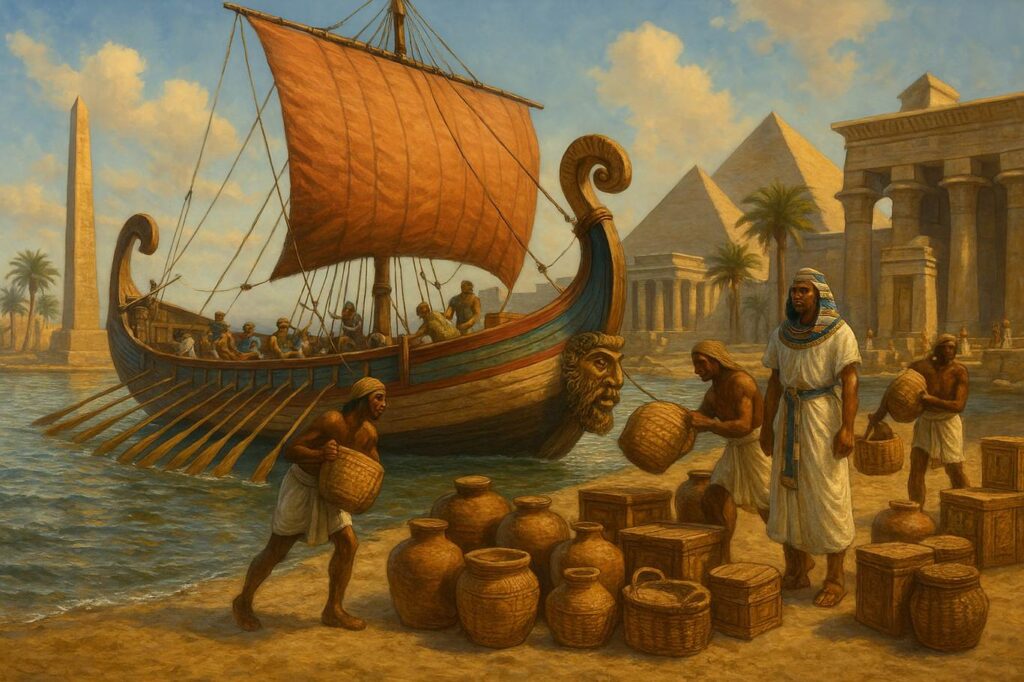
The drug trade appears to have also flourished in the opposite direction. Sorenson notes:
To the amazement of some scientists and the consternation of others, chemical evidence of tobacco has been found in ancient Egyptian mummies, although tobacco was supposed to be unknown in the Old World prior to Columbus. First, fragments of tobacco were found deep in the abdominal cavity of the 3200-year-old mummy of Pharaoh Ramses II while it was being studied in a European museum. Some skeptics immediately concluded that this had to be due to modern contamination in the museum. This American plant could not possibly have been known in Egypt, they insisted. In 1992 physical scientists in Germany used sophisticated laboratory instrumentation to test nine other Egyptian mummies. They found chemical residues of tobacco, coca (another [South] American plant, the source of cocaine), and the Asian native hashish in the hair, soft tissues, skin, and bones of eight of the mummies. These traces included cotinine, a chemical whose presence means that the tobacco had been consumed and metabolized while the deceased person was alive. (The ninth mummy contained coca and hashish residues but not tobacco.) Dates of the corpses according to historical records from Egypt range from 1070 BC to AD 395, indicating that these drugs were continuously available to some Egyptians for no less than 1,450 years. Investigators have since found evidence of the drugs in additional mummies for Egypt.[13] [comment added]
Hugh Nibley, the Mulekites, and the Phoenicians
Although the Mulekites left Jerusalem at the same general time as Lehi’s family, it appears that their experience in reaching the promised land was quite different from Lehi’s party. For example, Nephi and his helpers built a ship that was praised as being of good workmanship, and the voyage was a central theme in Nephite lore. However, there is no mention in the Book of Mormon of the Mulekites building a vessel or learning how to sail a ship. Likewise, to construct his ship, Nephi learned crafts, including smelting tools, working timbers, making cordage, and crafting sails. It would seem unlikely that Mulek, a royal prince of Judah, would have possessed any of these manual skills, nor would it have been appropriate for a prince to have indulged in physical labor such as manning the sails. Certainly, when he fled the fall of Jerusalem, he would have taken sufficient resources from the royal treasury to hire a ship and crew to take him to a safe haven.
Hugh Nibley suggested that the Mulekites probably reached the New World by hiring the services of Phoenician mariners. In support of this idea, Nibley pointed to the Phoenician names in the Book of Mormon, including the river Sidon that appears to have been named after the Phoenician harbor of Sidon.[14] Nibley notes that at the time the Mulekites left Jerusalem, the Phoenicians were colonizing far-off lands, and did so by sailing great distances from their home ports of Tyre and Sidon.
Having Prince Mulek and his entourage board Phoenician trading ships bound for the Amazon River basin seems reasonable. Mulek’s father, King Zedekiah, got into trouble with King Nebuchadnezzar of Babylon because Zedekiah was forming secret alliances with the Egyptians. To secure these secret alliances, one would expect the Egyptians to have guaranteed Zedekiah that if anything went wrong, they would protect Zedekiah and his family. Thus, when Nebuchadnezzar struck, it was too late for the king, however, his son Mulek could have fled to Egypt where he was placed on a Phoenician drug-trading ship bound for the Amazon Basin. Mulek might even have been promised that once things in Canaan settled down, he would be returned to his homeland, where he would regain the throne. That never happened.
Conclusion
At this point, all we can do is speculate about the role the people of the Amazon River Basin played in the history of the Book of Mormon. However, the clues discussed above lead me to believe that the Indigenous People of the Amazon played a significant role. It is estimated that only 4-9% of the archaeological sites in the Amazon Basin have been discovered to date. That means that 91-96% of possible Book of Mormon era sites are still hidden beneath the forest canopy of the earth’s largest rainforest.
[1] Nexus Information, https://nexusnewsfeed.com/article/ancient-mysteries/was-there-an-unknown-ancient-civilization-in-the-amazon/
[2] Anderson, Sonja, “Archaeologists Discover Ancient Cities Hidden in Ecuadorean Amazon,” January 12, 2024, https://www.smithsonianmag.com/smart-news/this-ancient-city-has-been-hidden-in-the-amazon-for-2500-years-180983587/.
[3] Mail Online, London Daily Mail, 04th December 2008.
http://www.dailymail.co.uk/news/worldnews/article-1091550/Ancient-city-discovered-deep-Amazonian-rainforest-linked-legendary-white-skinned-Cloud-People-Peru.html#, accessed January 2009.
[4] Holton, 12.
[5] Holton, Graham, Lost Cities White Tribes, 2007, Ch. 5. 2007 Chapter 5
[6] Ibid.
[7] Ibid.
[8] Carly M. Springer, “Tribes knew the Book of Mormon Stories before the Missionaries Arrived,” LDS Living Magazine, April 15, 2015.
[9] Sacred Blend, Brazilian Indigenous Mythology, https://sacred-blend.com/brazilian-indigenous-mythology/.
[10] Jett, Stephen, Interview “DNA Evidence and Book of Mormon Voyages,” The Greatness of the Evidence, A Marvelous Work,” July 2024, https://www.youtube.com/watch?v=VmFjNff8fAc.
[11] Drug Enforcement Admininstration, “Cannabis,” DEA Musuem, https://museum.dea.gov/exhibits/online-exhibits/cannabis-coca-and-poppy-natures-addictive-plants/cannabis.
[12] Sorenson, John L., “Ancient Voyages Across the Ocean to America: From ‘Impossible’ to ‘Certain,’” Journal of Book of Mormon Studies 14, no. 1 (2005): 4,5.
[13] Ibid.
[14] Collected Works of Hugh Nibley, vol. 6. 46.